LET’S MAKE A PLANT IRRIGATION SYSTEM
A plant needs water at every moment of its life cycle from germination to growth. Water is effective in seed germination and photosynthesis and growth of the plant.
The growth of a dehydrated plant slows down. If this situation continues for a long time, the plant may dry out.
Water is a vital substance for all living things in the world.
In this learning scenario, we want to design an irrigation system to prevent our plant from drying out while we are away.
In addition, we want to prevent water waste with this system.
Online meetings will be held with students on the zoom platform
This study will benefit from STEM education and the Science and Engineering design process.
Time: 4 lesson hours
Students’ Age: 12-13 years
Key Words: Plant, Growth, Irrigation Systems, Teamwork, Coding, STEM,
PURPOSE OF THE EVENT:
Goal; to enable students to design an irrigation system using engineering design processes and 21st century skills. At the end of the course, students will learn the factors affecting plant growth and the importance of water for plants.
ASSOCIATING IN-CLASS AND OTHER LESSONS
STEM INTEGRATION :
F.7.6.2.2. Explain the growth and development processes in plants and animals by giving examples.
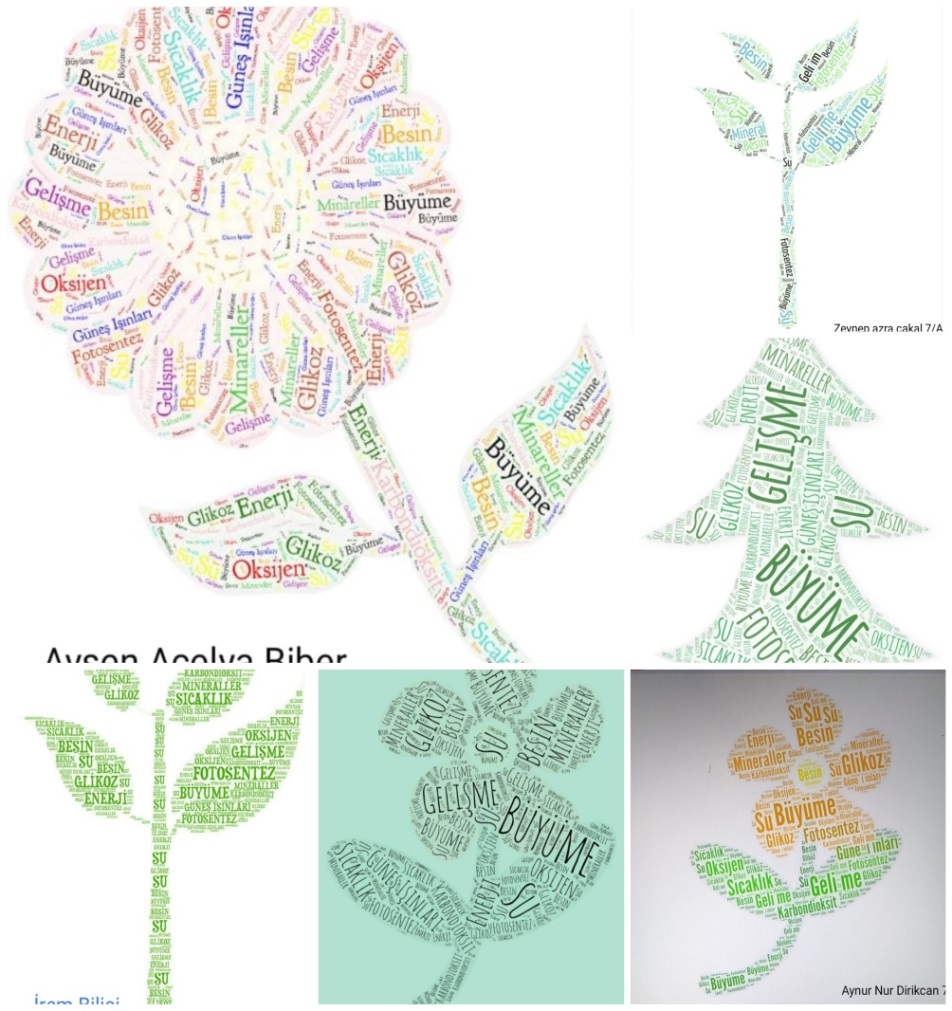
F.7.6.2.3. Explain the basic factors affecting the growth and development of plants and animals.
F.7.6.2.4. It takes care of a plant or animal and reports its development process.
a. Scientific Process Skills
• Observation,
•Measuring,
• Classification,
• Saving data,
• Hypothesising,
• Using data
• model building,
• Changing and controlling variables,
• experimenting
b. Life Skills
– Analytical thinking
– Decision making
– Creative thinking
– Entrepreneurship
– Contact
– Teamwork
Maths:
-Makes the necessary calculations
Engineering:
– Models selected solutions on paper, in computer simulation or as a 3D model
-Discuss and understand the principles of thinking
– Think critically and define system boundaries
– Think rationally to develop or improve a product
-Applies strategies that can be decided while generating solutions
-Notes records, improvements and bugs
-Uses the engineering design cycle
-Prepare the prototype of the product.
Technology
a) investigates irrigation systems.
b) Uses clear and understandable written, verbal and visual communication techniques.
c) Uses computer-aided drawing programs, offers ideas and designs
d) Portfolio amount
e) Learns to write code with Arduino.
21st Century Skills
• Shares thoughts, questions, ideas and solutions. (Contact)
• Collaborates with groupmates to achieve a goal. (Cooperation)
• It looks at problems from a new perspective, and links learning objects and disciplines. (Critical thinking)
• Tries new approaches to innovation and innovation, designs new products. (Creativity)
TEACHING-LEARNING METHODS AND TECHNIQUES:
Project Based Learning, Problem Based Learning, Presentation, invention, question-answer and experimenting, padlet (https://padlet.com/aysuncakir44milidya/ooccogjcbvxtuzv),
https://www.arduino.cc/reference/en/,
LEARNING, TEACHING ACTIVITIES
THE İMPLEMENTATİON PROCESS OF OUR PROJECT
Preliminary Information, Curiosity Awakening Stage:
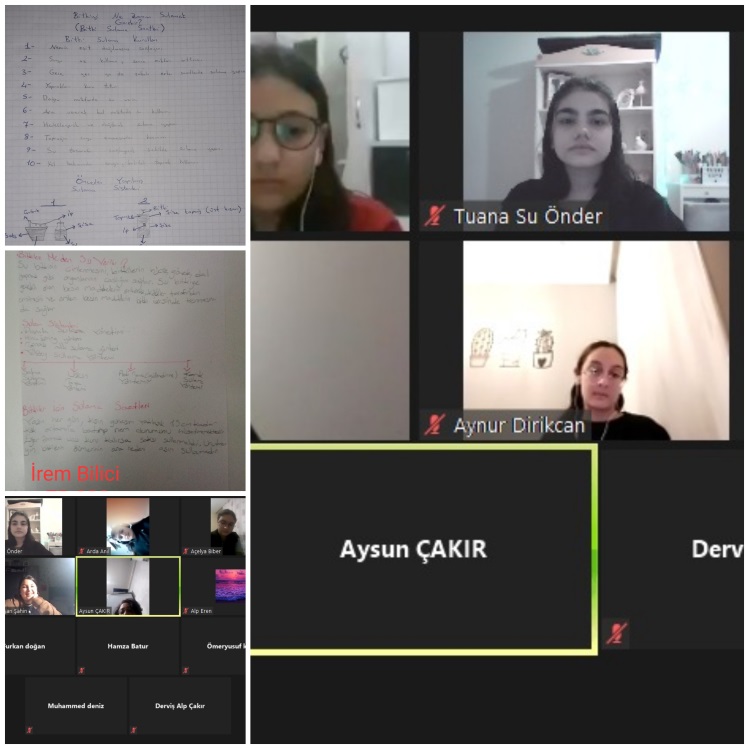
The students are divided into two groups of four. What is the importance of water to you students? What do you think are the factors that grow a plant? questions are posed.
Problem: My mother loves growing flowers. But when he goes on vacation, he cannot take his flowers with him. What system should my mother create to keep her flowers from drying out while she is on vacation?
Exploring
Students are asked to collect data about irrigation systems.
Explanation:
The data collected by the students are discussed in online meetings.
It was stated that in our world where fresh water resources are rapidly depleted, it is important to use water without wasting.
Elaboration
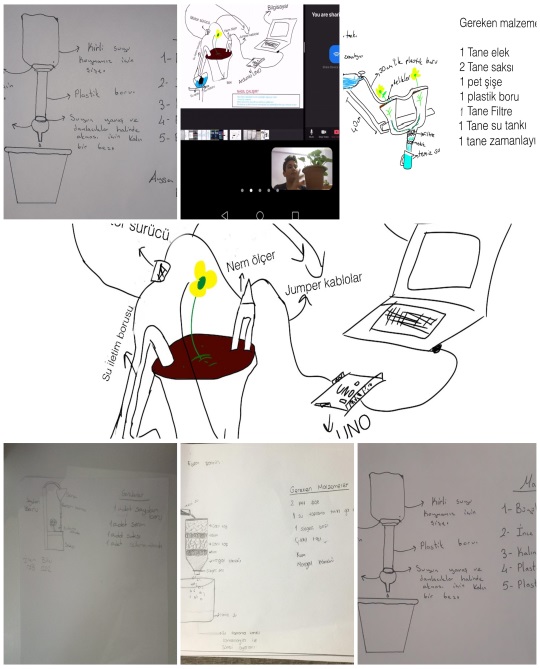
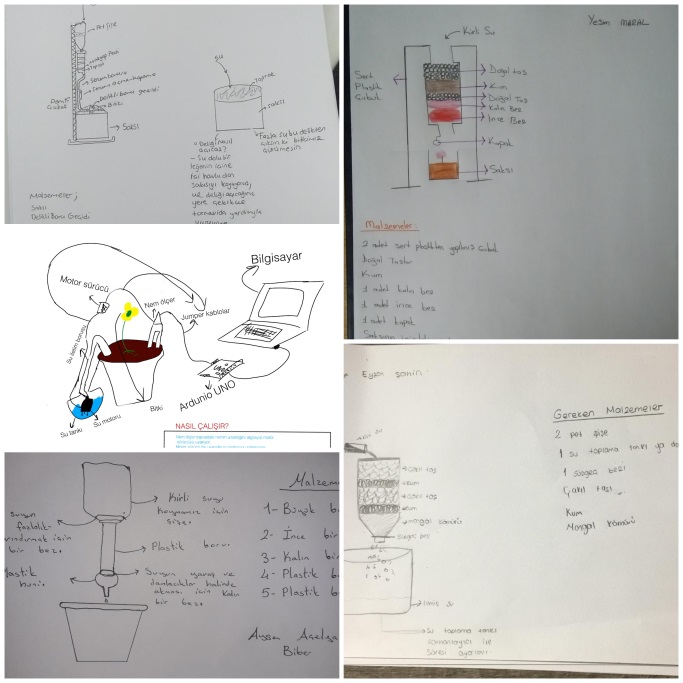
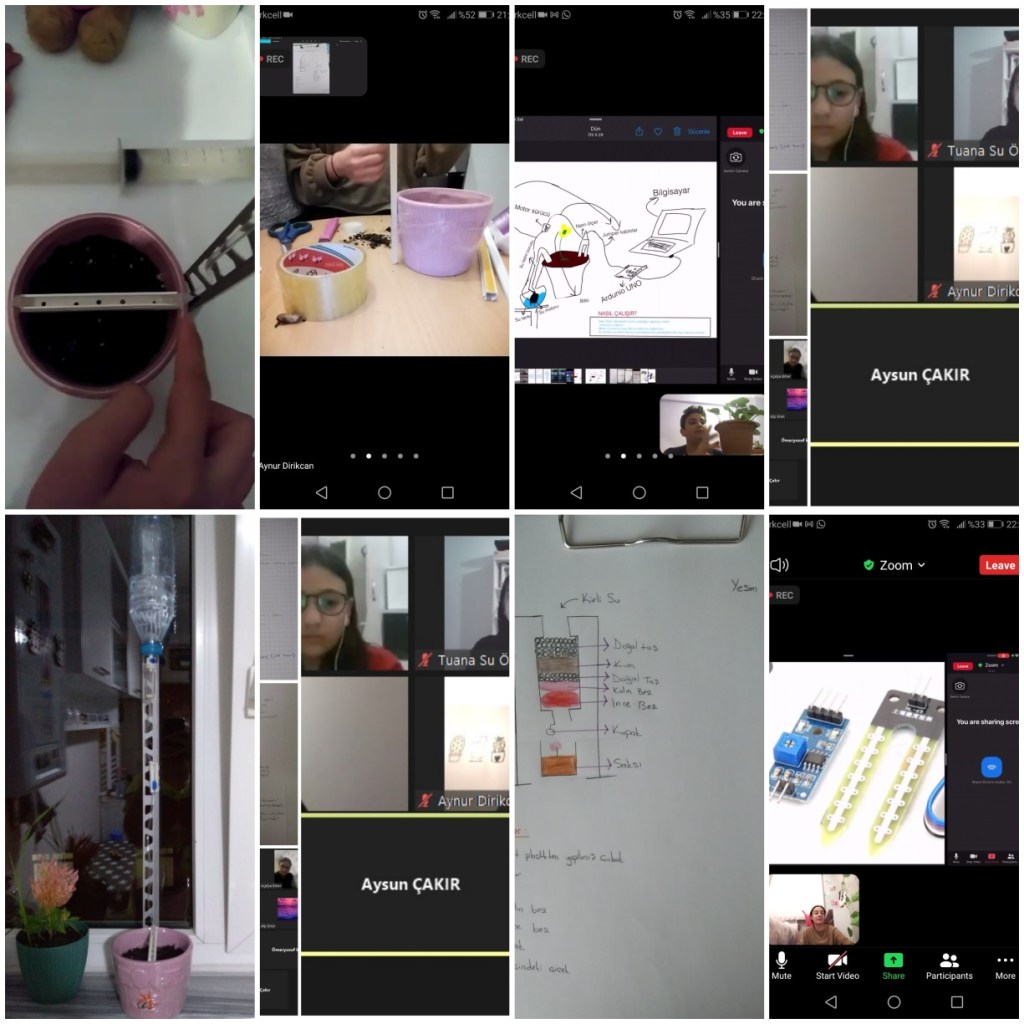
Students learn about the engineering design cycle and. They are asked to draw their prototypes using century skills. The drawings are viewed and discussed in the online meeting. Students are asked to make their prototypes. Students are asked to test the product they designed. They are asked to produce solutions to the problems they encounter during the production phase.
The picture is the author’s own –(Attribution CC-BY)
https://www.youtube.com/watch?v=YDVQErq-Vhc
Evaluation : The students split into two groups and created two prototypes.
As a result of this experience, students discovered new professions in software and agriculture. We have seen that solving an interdisciplinary approach with integrated applications in solving a problem is more effective in learning the knowledge and skills of certain disciplines.
 Site başlığı